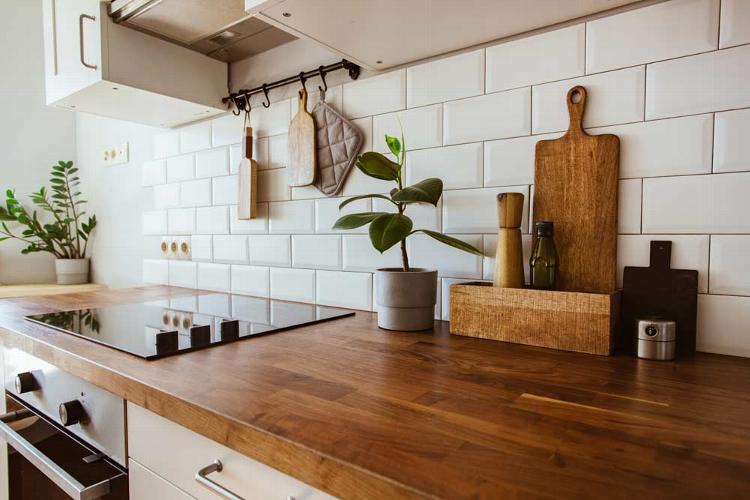
How to Choose the Right Kitchen Worktops
Your worktop is one of the most frequently used surfaces in your kitchen. It needs to cope with food preparation, spills, hot cookware, cleaning and everyday family life, while also completing the look of your space.
Appearance matters, but it is only one part of the decision. Durability, maintenance, heat resistance, stain resistance, cost and compatibility with your cabinet style should all be considered before choosing.
In this guide, we compare quartz, granite, solid wood and laminate kitchen worktops to help you find the right option for your lifestyle, budget and design.
What Factors Should You Consider When Choosing a Kitchen Worktop?
There is no single best worktop for every home. The ideal choice depends on how you use your kitchen, the look you want to achieve and how much ongoing care you are happy to undertake.
Budget and Total Installation Cost
Compare fully installed quotations rather than material-only prices. The final cost can include templating, cutting, delivery and professional fitting, particularly for stone surfaces.
Remember to allow for sink, tap and hob cut-outs, drainage grooves, upstands, splashbacks, specialist edge profiles, curved sections and unusual shapes. A lower-priced material may not always be the lowest long-term cost if it needs replacing sooner or requires additional work.
Durability and Everyday Use
Think honestly about how your kitchen is used. A busy family home, frequent cooks, children and pets can all place more demands on a worktop.
Consider resistance to scratches, impact, chips, stains and water. It is also worth asking whether you will consistently use chopping boards and trivets, as even highly durable worktops can be damaged by poor day-to-day habits.
Cleaning and Maintenance
Some kitchen worktops need little more than a wipe with warm water and mild detergent, while others require periodic oiling or sealing.
Check whether harsh, abrasive or acidic cleaning products could affect the surface. Solid wood can often be sanded and refinished if marked, for example, whereas laminate cannot usually be repaired in the same way.
Heat and Stain Resistance
Hot pans should not be placed directly on any worktop unless the manufacturer specifically confirms this is safe. Quartz is highly durable but contains resin, so trivets are still recommended. Granite has strong heat resistance, but prolonged heat can cause thermal shock or discolouration.
Laminate can scorch or delaminate, while wood may mark, scorch or absorb spills if it is not properly protected.
Appearance and Kitchen Style
Decide whether you prefer natural variation or a more consistent finish. Granite and wood are naturally individual, while quartz and laminate can provide greater consistency across long worktop runs.
Consider how your chosen surface will work alongside cabinet colours, flooring, handles and splashbacks. Subtle textures suit many schemes, while bold veining can turn an island into a focal point.
Kitchen Layout and Installation
Long runs, corners, islands and joins all affect the material choice and installation method. Stone worktops are heavy, so cabinets must offer suitable support.
Sinks, taps and hobs need careful positioning. Quartz and granite usually require professional templating after your base units have been fitted, helping to achieve accurate cut-outs and joins.
What Are the Most Popular Worktop Materials?
Quartz, granite, solid wood and laminate are four of the most popular choices for kitchen worktops. Each brings a different balance of price, appearance, maintenance and performance.
Quartz is an engineered, consistent and low-maintenance surface. Granite is a natural stone with distinctive patterns. Solid wood provides warmth and develops character over time, while laminate is a versatile and affordable option with a huge variety of finishes.
Porcelain, ceramic, stainless steel and other specialist surfaces are also available, but the comparison below focuses on the four materials most homeowners consider first.
|
Material |
Cost Level |
Maintenance |
Heat Resistance |
Stain Resistance |
|
Quartz |
High |
Low |
Good, but use trivets |
Excellent |
|
Granite |
High |
Moderate |
Very good |
Good when correctly sealed |
|
Solid wood |
Mid-range |
Regular |
Limited |
Moderate |
|
Laminate |
Budget-friendly |
Low |
Limited |
Good if undamaged |
Performance varies by manufacturer, product quality, thickness, finish and installation. It is always worth reviewing the warranty and care guidance for the exact product you are considering.
Is a Quartz Worktop the Best Choice for a Busy Kitchen?
Quartz worktops are engineered surfaces made from mineral content combined with binders, resins and pigments. Exact compositions vary between manufacturers, but quartz is widely chosen for its reliable finish, broad colour range and practical day-to-day performance.
Advantages of Quartz Worktops
Quartz is generally non-porous and highly resistant to everyday staining. It does not usually need routine sealing, is easy to clean and is available in consistent colours, subtle patterns and stone-inspired finishes.
It can suit contemporary, handleless and traditional kitchens alike. It is particularly useful where homeowners want the same colour and pattern across several worktop sections, an island or matching splashbacks.
Potential Disadvantages of Quartz Worktops
Quartz is more expensive than most laminate worktops and many wood options. It is also heavy, requiring specialist fabrication and installation.
Although durable, excessive heat can damage the resin content, so use trivets for hot pans. Heavy impacts around edges, corners or cut-outs can also cause chips.
Best Suited To
Quartz is often the best low-maintenance kitchen worktop for busy households, modern kitchens and homeowners who want a luxury appearance without regular sealing or oiling. At Bookham Kitchens, we can help you compare quartz samples against your chosen cabinetry and lighting.
Granite Worktops: Natural Character and Long-Term Durability
Granite is a natural stone quarried in slabs. Every slab has its own colour, mineral pattern, movement and variation, meaning no two granite kitchen worktops are exactly alike.
A small sample is useful, but it may not fully represent the finished slab. This individuality is a major part of granite's appeal.
Advantages of Granite
Granite offers a distinctive natural appearance and strong resistance to heat and everyday wear. It can suit traditional, shaker and contemporary kitchens, and often creates a premium focal point on a kitchen island.
It is one of the most durable worktops when chosen, fabricated and maintained correctly. Granite's natural pattern can bring depth and character to a scheme that may otherwise feel uniform.
Potential Disadvantages
Some granite worktops need sealing to reduce liquid absorption and staining. Requirements vary according to the stone and finish, so always follow the supplier's advice.
Granite is heavy, professionally installed and can have visible joins. Exact colour matching may be difficult, while edges can chip if struck hard. Although granite is heat resistant, trivets are still sensible because prolonged heat may cause thermal shock.
Best Suited To
Granite is ideal for homeowners who value genuine natural stone, strong heat performance and individual character. It works particularly well in high-end, traditional and shaker kitchens.
Quartz vs Granite Worktops: Which Is Better?
When comparing a quartz vs granite worktop in the UK, the decision often comes down to consistency, maintenance and the look you prefer.
Quartz is engineered, so it usually offers more predictable colour and pattern across multiple sections. Granite is natural, which gives every installation a unique appearance but can make exact matching more difficult.
Quartz is generally non-porous and does not usually require sealing. Granite may need periodic sealing, depending on the slab and finish. Both are strong materials, but granite has a natural advantage for heat resistance, while quartz is typically easier to maintain on a daily basis.
Both can chip around vulnerable edges and cut-outs if subjected to heavy impact. Installation costs can be similar because both normally need professional templating, cutting and fitting.
Choose Quartz If You…
- Want consistent colour, pattern and finish.
- Prefer low routine maintenance.
- Need excellent everyday stain resistance.
- Are designing a contemporary or handleless kitchen.
- Want a polished, practical surface across long runs.
Choose Granite If You…
- Want natural variation and individual character.
- Prioritise strong natural heat resistance.
- Like the appearance of real stone.
- Are designing a traditional, luxury or shaker kitchen.
- Do not mind some additional care where required.
The final decision should be based on the specific product rather than the material name alone, as quality, finish and fabrication all matter.
Is a Solid Wood Kitchen Worktop Practical?
A solid wood worktop brings natural warmth, texture and character to a kitchen. It is especially effective with shaker, farmhouse and traditional cabinetry, but can also soften the clean lines of a contemporary space.
Benefits of Solid Wood
Every wooden worktop has unique grain variation, helping it feel personal and timeless. Minor scratches, marks and dents can often be sanded out and refinished, which is a major advantage over materials that cannot be repaired.
Wood can be used across the full kitchen or selectively on an island, breakfast bar or seating area to introduce contrast alongside stone or laminate preparation surfaces.
Maintenance and Drawbacks
Wood requires regular oiling in line with the supplier's instructions. Standing water is a particular concern around sinks, tap holes and joins, so spills should be wiped up promptly.
It can scratch, dent, scorch and change colour over time. Poor installation or inadequate sealing can allow water damage or movement. As a natural material, wood expands and contracts with changing humidity and temperature.
Best Suited To
Solid wood is a good choice for homeowners who appreciate a surface that develops character and are happy to carry out regular care. It is particularly suited to traditional kitchens, islands and breakfast bars.
Are Laminate Worktops a Good Budget-Friendly Option?
Laminate is often the most affordable option of the four materials. It is made using a decorative surface layer bonded to a board core and is available in an extensive choice of colours, textures and finishes.
Modern laminate can offer convincing stone, wood and concrete effects, making it one of the most popular affordable alternatives to quartz worktops.
Benefits of Laminate
Laminate kitchen worktops are comparatively lightweight, straightforward to fit and easy to clean day to day. They can be an excellent option for controlled renovation budgets, utility rooms, rental properties or projects likely to be updated again in future.
There is a broad range of designs available, from traditional wood effects to sleek matt finishes and realistic marble-inspired patterns.
Limitations to Consider
Laminate can scorch if hot cookware is placed directly on it. Knives can cut or scratch the surface, so chopping boards are essential.
If water enters a damaged joint or exposed edge, the core may swell. Unlike wood, laminate cannot generally be sanded and refinished. Premium designs can look very realistic, but close inspection may reveal joins or repeated patterns.
Best Suited To
Laminate is ideal for budget-conscious homeowners who want design flexibility and low routine maintenance. A good-quality laminate can be a practical, attractive choice when fitted carefully.
What Is the Hardest-Wearing Kitchen Worktop?
There is no universal winner because “hardest wearing” can mean different things. A worktop that resists stains may not offer the best heat resistance, while a surface that marks easily may still be easy to restore.
Quartz performs particularly well for stain resistance and routine maintenance. Granite performs strongly against heat and general wear when correctly sealed and cared for. Laminate resists many everyday spills but is more vulnerable to cuts, heat and damaged edges. Solid wood can mark more easily but has the benefit of being sandable and repairable.
Edge design, thickness, fabrication, cabinet support and installation quality all affect how durable a finished surface will be.
|
Category |
Recommended Material |
Why |
|
Best for stain resistance |
Quartz |
Non-porous, easy-clean surface |
|
Best for natural heat resistance |
Granite |
Strong resistance to heat when used sensibly |
|
Easiest to repair |
Solid wood |
Can often be sanded and refinished |
|
Best value for everyday use |
Laminate |
Affordable and widely available |
|
Lowest routine maintenance |
Quartz |
Usually requires no routine sealing or oiling |
Before purchasing, check the product warranty, care instructions and suitability for undermounted sinks, drainage grooves or other specialist details.
How Much Do Kitchen Worktops Cost in the UK?
Worktop costs vary significantly, so prices should always be treated as approximate guide prices rather than a quotation. Published UK cost guides commonly indicate the following material-only ranges:
|
Material |
Approximate Material Price |
|
Laminate |
£20–£70 per m² |
|
Solid wood |
£100–£200 per m² |
|
Quartz |
£200–£550 per m² |
|
Granite |
£250–£450 per m² |
The final cost of kitchen worktop supply and installation can be influenced by far more than the material itself. Stone is often priced by slab, fabrication requirements and fitting complexity rather than by simple square metre rates.
Your quotation may be affected by:
- Brand, collection and product thickness.
- Number and length of worktop runs.
- Templating, delivery and installation.
- Sink, tap and hob cut-outs.
- Polished drainage grooves.
- Upstands and matching splashbacks.
- Edge profiles, curves and unusual shapes.
- Waterfall ends and island detailing.
- Access to the property.
- Removal and disposal of existing worktops.
- Waste, offcuts and slab requirements.
When comparing prices, ask whether VAT, fitting, cut-outs and finishing details are included. Like-for-like quotations make it easier to understand whether expensive kitchen worktops are worth it for your priorities and long-term plans.
What Are the Latest Trends for Kitchen Worktops in 2026?
The most successful worktop ideas for modern kitchens are usually those that feel connected to the wider room, rather than chosen purely because they are fashionable. Current preferences favour warm, natural-looking surfaces and practical finishes that will remain appealing for years.
Warm, Earthy Neutrals
Warm whites, beige, taupe, sand and soft greige are popular alternatives to stark white and cool grey. These shades work well with timber cabinetry, painted shaker doors and natural flooring.
Softer, More Subtle Veining
Marble-inspired quartz and granite remain popular, but many homeowners now prefer finer, less dramatic veining. This gives a refined finish without overwhelming the cabinetry.
Coordinating Worktops and Splashbacks
Using the same or a coordinating surface for worktops and splashbacks creates a considered, seamless look. It can be especially effective behind a hob or on a statement island.
Slim Contemporary Profiles
Slimmer worktop profiles suit modern and handleless kitchens. They can make a large island feel lighter while retaining a premium, tailored appearance.
Curves and Softer Shapes
Curved corners, rounded islands and gently shaped breakfast bars can make a kitchen feel more welcoming and improve movement through the space.
Mixing Materials
Combining materials remains a practical and attractive option. For example, stone can be used around sinks and preparation areas, with wood used for a breakfast bar to introduce warmth and texture.
What Type of Kitchen Worktop Is Best for Your Home?
Your ideal worktop should suit how you live, not simply what looks best in a showroom photograph. These recommendations provide a useful starting point:
- Best for low maintenance: Quartz.
- Best for natural variation: Granite.
- Best for warmth and repairability: Solid wood.
- Best for a limited budget: Laminate.
- Best for a busy family kitchen: Quartz or a high-quality laminate, depending on budget.
- Best for a traditional shaker kitchen: Granite or solid wood, although quartz can work beautifully too.
- Best for a contemporary handleless kitchen: Quartz or a sleek granite finish.
- Best for combining materials: Stone around wet and preparation areas, with wood on a breakfast bar or island seating area.
These are general recommendations only. Individual products vary in quality, warranty, finish and maintenance requirements.
Before deciding, use this checklist:
1. What is your maximum total budget, including fitting and cut-outs?
2. How much maintenance is realistic for your household?
3. Is the kitchen used heavily every day?
4. Do you want natural variation or a consistent finish?
5. Are heat resistance or stain resistance your main concern?
6. Will the kitchen include an island, undermounted sink or complex corners?
7. How does the worktop look beside your cabinet door, flooring and splashback samples?
8. Will the material still suit your home and lifestyle in several years' time?
For a complete kitchen scheme, the worktop should be considered alongside cabinets, storage, appliances, lighting and flooring. Explore our Kitchen Design and Fitting in Surrey service, as well as our Shaker Kitchens and Handleless Kitchens options.
See Worktop Samples as Part of Your Kitchen Design Consultation
Photographs are useful for inspiration, but they cannot fully show the exact colour, texture, sheen or natural variation of a worktop. Seeing samples beside cabinet doors, flooring and splashback options under different lighting makes the decision much easier.
At Bookham Kitchens, we help homeowners compare the appearance, upkeep, practical performance and cost of their preferred kitchen worktops as part of a complete design. Arrange your free, no-obligation consultation or visit our Surrey showroom to explore samples and plan a kitchen that works beautifully for your home.
BOOK A CONSULTATION OUR KITCHEN WORKTOPS